Ensemble Chakâm
I founded the Ensemble Chakâm in 2014 to highlight the richness of traditional Iranian instrumental music.
The trio first took shape during tours in Switzerland, France, and Australia, alongside two Iranian musicians on the qanun and the tombak.
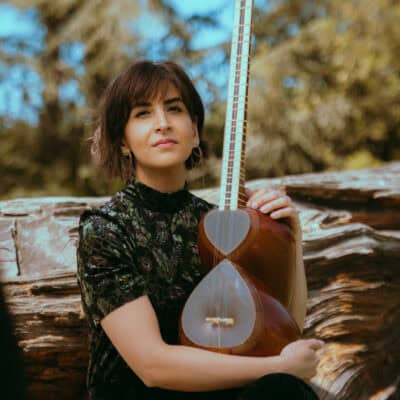
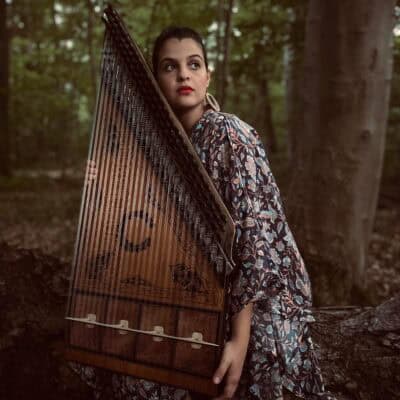
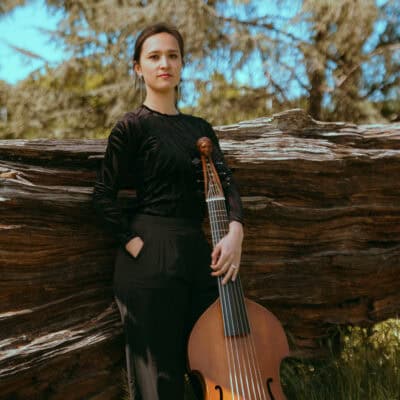
Over time, the project evolved toward a new artistic direction, shaped by encounters with other musicians from diverse backgrounds. Today, the ensemble brings together the târ, the viola da gamba, and the qanun. This is how the idea emerged to combine three musical worlds, each member contributing their own compositions—reflections of our shared experiences: displacement, the idealization of a fading elsewhere, but also a thirst for renewal and a sense of hope. Each piece transforms through the alchemy of the trio: the final result no longer fully belongs to us—it shapes us as much as we shape it. Living and creating with our differences becomes a way of engaging in dialogue, rather than simply interpreting a repertoire or a musical genre.
In the collective imagination, it is still rare to associate three female musicians who are both instrumentalists and composers. Expectations often center on a featured voice, surrounded by accompanying musicians—especially when it comes to musical traditions from elsewhere, often grouped under the loosely defined label of “world music.” Chakâm chooses another path: allowing the instruments to converse with one another, like three distinct voices that meet and rise together, without hierarchy, to tell a different story of what music can be.